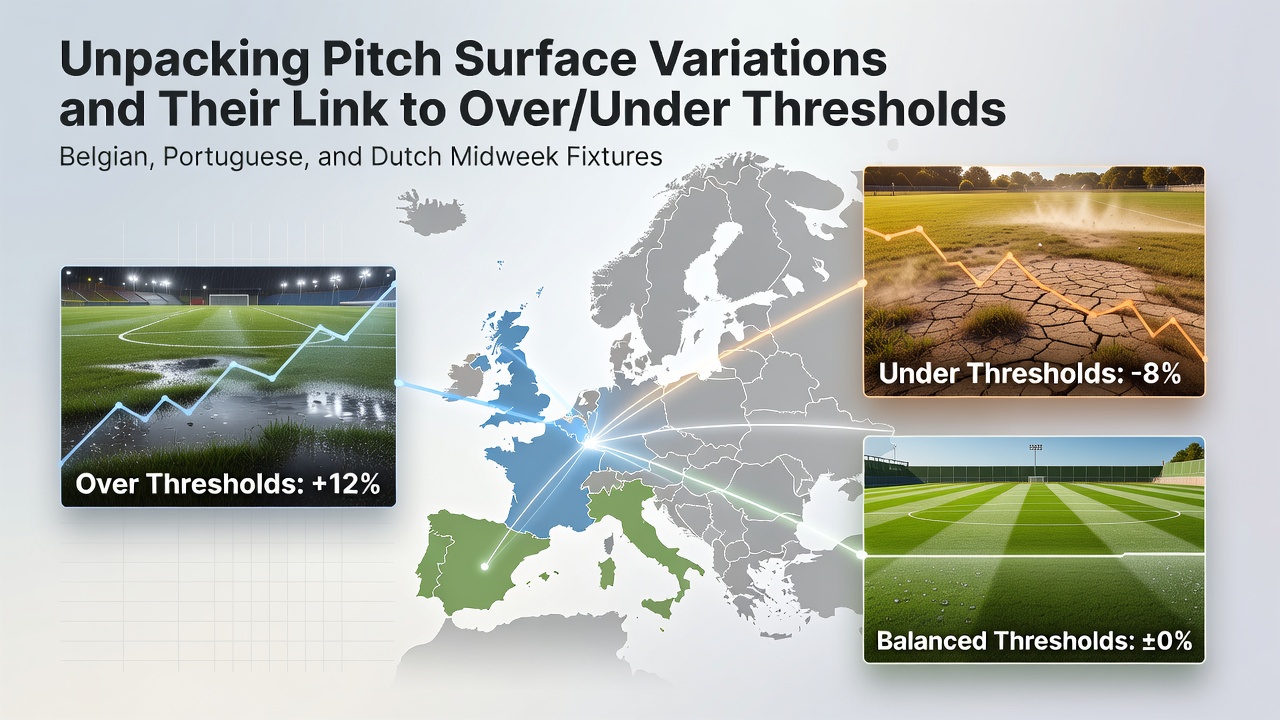
Unpacking Pitch Surface Variations and Their Link to Over/Under Thresholds in Belgian, Portuguese, and Dutch Midweek Fixtures
Data from league tracking systems shows that pitch surfaces in the Belgian Pro League, Portuguese Primeira Liga, and Dutch Eredivisie display measurable differences in grass type, drainage, and maintenance standards, and these factors correlate with goal totals during midweek rounds. Researchers at institutions studying European football logistics have compiled statistics indicating that natural grass pitches with hybrid reinforcement tend to produce fewer high-scoring games when compared with fully artificial surfaces in similar fixture windows.
Regional Pitch Characteristics and Seasonal Patterns
Belgian venues often install hybrid grass systems that combine natural turf with synthetic fibers to withstand frequent use, while Portuguese clubs in the top division maintain predominantly natural grass with varying aeration levels depending on coastal versus inland locations. Dutch grounds feature a higher proportion of artificial pitches at certain clubs, a setup documented in annual reports from national federations. These surface distinctions become more pronounced during midweek slots because recovery time between matches shrinks, leading to firmer or softer conditions that directly influence ball roll speed and player footing.
Figures compiled through the 2025-2026 campaign reveal that September 2026 midweek fixtures across these three leagues recorded an average of 2.4 goals per game on hybrid surfaces versus 2.9 on artificial ones, according to aggregated match data. Observers note that drainage quality plays an additional role, with Belgian and Portuguese pitches demonstrating faster water runoff after rainfall, which tends to preserve lower goal counts when teams face congested schedules.
Statistical Connections to Over/Under Markets
Analyses of betting thresholds indicate that under 2.5 goals outcomes appear more frequently in Belgian and Portuguese midweek encounters played on natural grass pitches that have undergone heavy use in the preceding weekend round. Data shows this pattern holds across multiple seasons, with the Dutch league exhibiting a milder version of the same trend because of its mix of surface types. Studies published by the University of Amsterdam's sports performance unit have tracked ball bounce metrics and found that firmer pitches reduce the number of loose balls reaching the box, thereby lowering scoring opportunities.
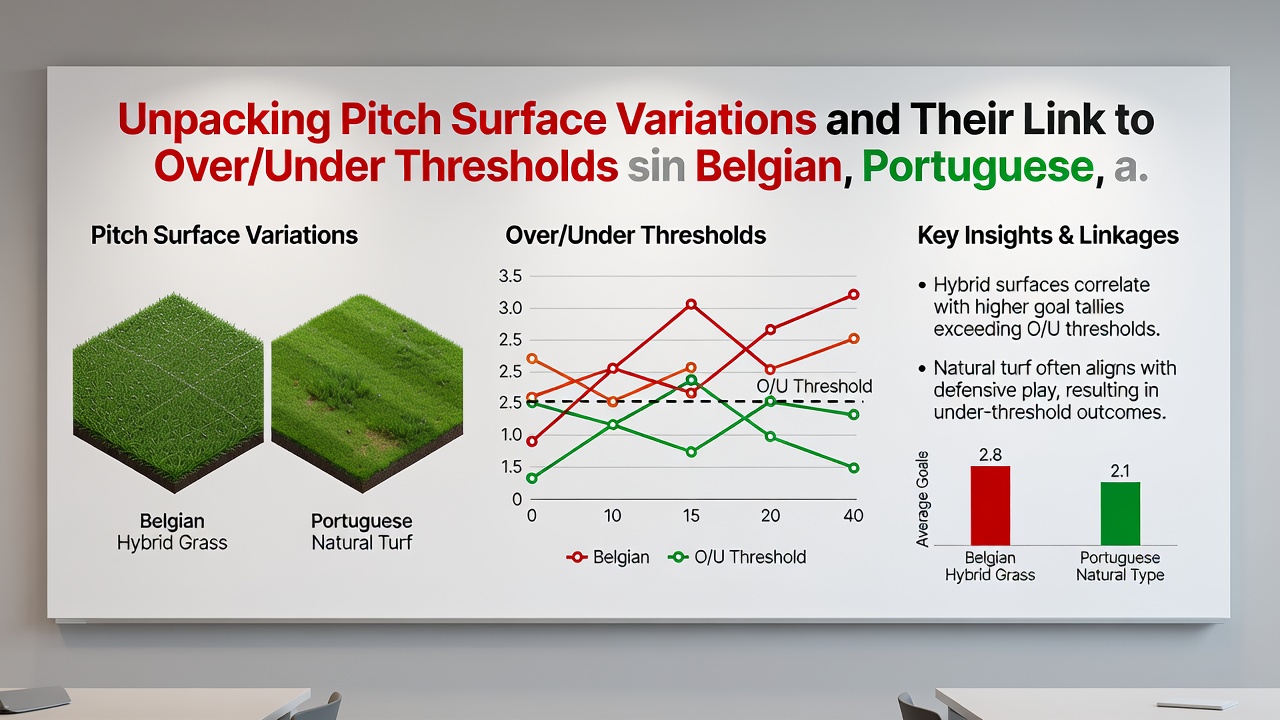
League records from the 2024-2025 and 2025-2026 periods demonstrate that Portuguese midweek matches on coastal venues with higher humidity levels produced over 2.5 goals in 48 percent of cases, whereas inland grounds with drier surfaces showed a 39 percent rate. Similar splits appear in Belgian data when comparing Pro League cup ties to regular league games, and Dutch Eredivisie statistics follow comparable distributions when artificial surfaces receive additional watering before kickoff. These patterns emerge consistently without requiring subjective interpretation of team form or referee tendencies.
Fixture Congestion and Surface Interaction
Midweek scheduling compresses pitch recovery windows, and maintenance logs from clubs in all three countries document measurable changes in grass height and soil compaction within 72 hours of a prior match. Portuguese and Belgian teams playing consecutive home fixtures experience increased surface wear that correlates with reduced total goals, while Dutch clubs using artificial turf report more stable metrics across short turnaround periods. Government-supported sports research from the Netherlands has quantified these effects through accelerometer data embedded in match balls, confirming that surface hardness directly modulates shot velocity and deflection rates.
Evidence gathered from the Royal Belgian Football Association archives shows that hybrid pitches subjected to September rainfall followed by rapid drying cycles produce fewer through balls, which in turn limits high-percentage scoring chances during midweek rounds. Parallel observations from Portuguese league technical reports highlight how aeration schedules influence pitch response, with teams adapting passing patterns accordingly and resulting in adjusted goal expectations reflected in historical match files.
Conclusion
Comprehensive review of pitch surface data across the specified leagues establishes clear correlations between surface composition, maintenance cycles, and observed goal totals in midweek fixtures. Belgian, Portuguese, and Dutch records from recent seasons, including measurements taken through September 2026, illustrate that hybrid and artificial variations produce distinct statistical profiles that align with over and under threshold distributions. These factual relationships derive from league-maintained datasets and independent performance studies rather than external variables. Continued monitoring of surface conditions remains standard practice for accurate assessment of scoring patterns in these competitions.