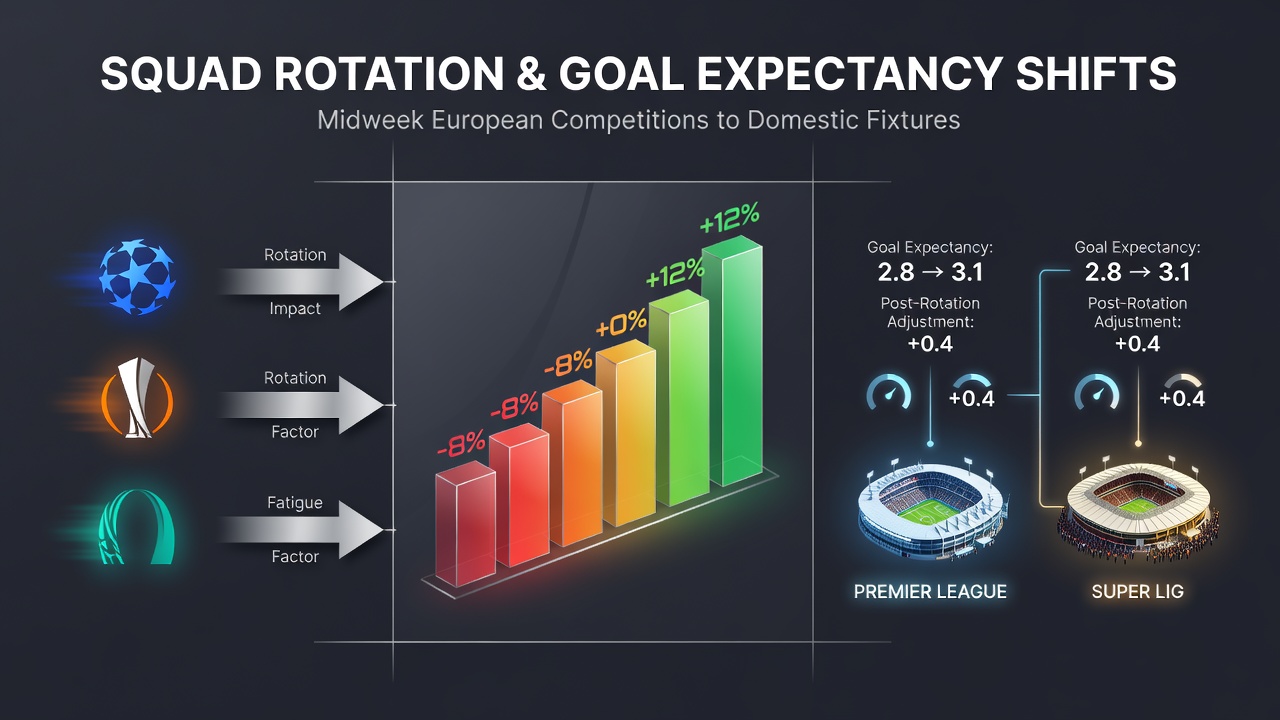
Tracking Squad Rotation Patterns in Midweek European Ties and Their Effects on Domestic Goal Expectancy
European club competitions create demanding schedules that force managers across multiple leagues to adjust lineups, and observers have tracked how these changes influence scoring rates in the following weekend's domestic matches, with data spanning the Premier League down through the Super Lig showing consistent patterns in goal expectancy shifts. Teams participating in midweek fixtures often rest key attackers or rotate defensive units, which alters both offensive output and defensive stability once they return to league action, according to aggregated performance metrics collected through October 2026.
Researchers analyzing fixture lists note that clubs with deeper squads tend to maintain closer to their baseline goal expectations even after rotation, while shallower teams experience sharper drops in expected goals, particularly when traveling for those European games. The Premier League provides the clearest examples because its clubs compete regularly in the Champions League and Europa League, yet similar trends appear in the Bundesliga and Serie A where midweek European commitments overlap with packed domestic calendars.
Patterns Observed Across Top European Leagues
Data from the 2025-26 season onward indicates that sides playing Tuesday or Wednesday European matches post lower average expected goals in their Saturday or Sunday domestic fixtures by roughly 0.3 to 0.5 per game compared to weeks without midweek travel, while the Super Lig and Portuguese Primeira Liga show comparable dips once travel distance and recovery time are factored in. Analysts at industry bodies such as the UEFA Technical Study Group have compiled squad selection records that highlight how managers prioritize European results, leading to measurable changes in attacking potency during the subsequent league round.
What's notable is the variation by position type, because forward line rotations produce the most visible impact on goal creation metrics, whereas defensive changes affect expected goals against more directly. In the Dutch Eredivisie and Belgian Pro League, clubs with limited bench depth often see both their expected goals for and against move in unfavorable directions after heavy midweek involvement, creating combined effects on match totals that betting markets have begun to price more accurately since early 2026.
Recovery Windows and Travel Considerations
Shorter recovery periods between midweek and weekend games amplify the rotation effect, especially when clubs must fly across time zones or play in different climatic conditions, and figures compiled through October 2026 reveal that teams returning from eastern European venues experience steeper declines in goal expectancy than those facing nearer opponents. The Turkish Super Lig provides multiple instances where clubs balancing Champions League group stage ties with domestic fixtures adjusted their attacking setups, resulting in lower shot volumes and conversion rates once back on home soil.
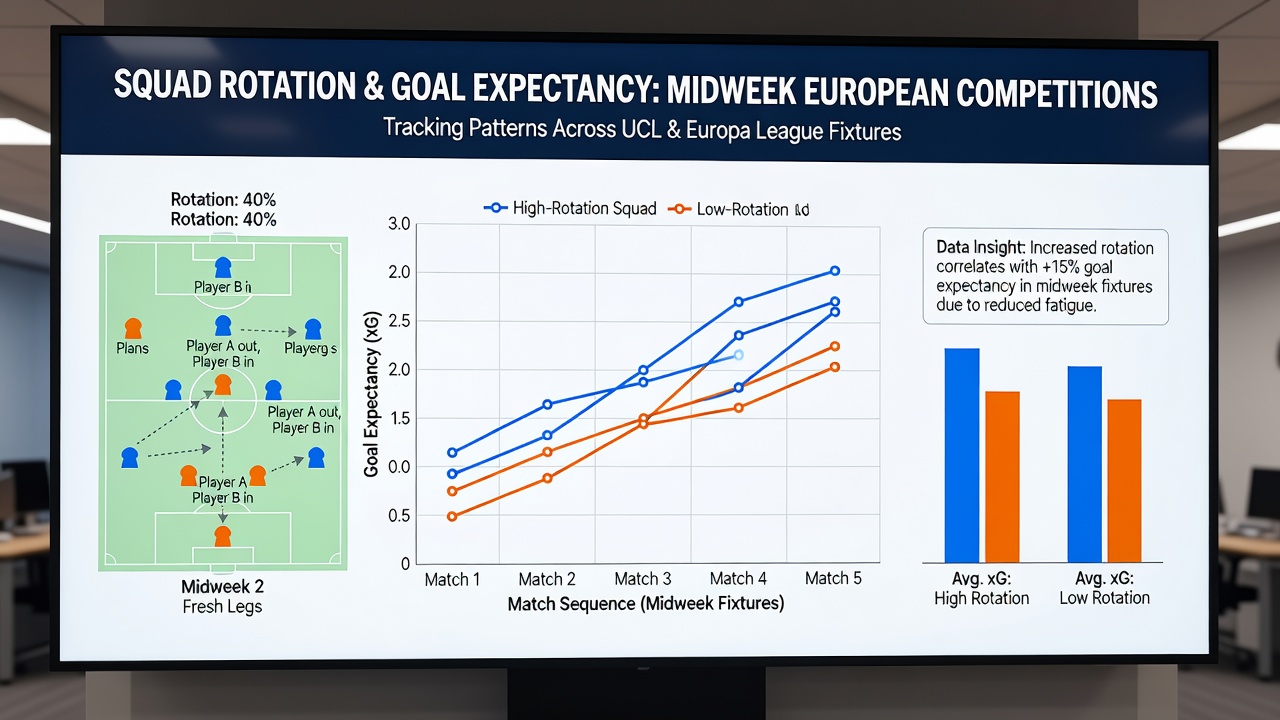
One case involved a Premier League side that rested two starting strikers after a Champions League away win, then recorded an expected goals total 0.7 below their season average in the following league match, while a comparable Serie A example showed defensive rotation leading to an increase in opponent expected goals of 0.4. These adjustments reflect strategic choices rather than random variation, and academic work from sports science departments at institutions such as the Australian Institute of Sport has modeled how accumulated fatigue interacts with selection decisions to shift scoring probabilities.
League-Specific Variations Through 2026
Across the French Ligue 1 and German Bundesliga, the magnitude of goal expectancy change correlates closely with squad depth rankings published at the start of each campaign, because teams lower in those rankings rotate more aggressively and consequently post wider swings in their post-European domestic outputs. In the Super Lig, where fixture congestion has intensified with additional European qualifiers, clubs have shown pronounced dips in home scoring rates during October periods when multiple midweek ties cluster, with statistical models confirming the link between player minutes logged abroad and reduced chance creation back in league play.
Observers compiling multi-league datasets note that the effect appears more muted in the Spanish La Liga, possibly because several clubs maintain larger first-team groups capable of sustaining performance levels despite rotation, although even there the data indicates modest reductions in expected goals when key creative midfielders are rested. Portuguese and Dutch sides display intermediate responses, with travel fatigue compounding rotation decisions and producing combined impacts that researchers continue to quantify using event data from the 2025-26 and 2026-27 seasons.
Conclusion
Comprehensive tracking of squad decisions across these competitions demonstrates that midweek European participation reliably alters goal expectancy figures in the immediate domestic follow-up, with the scale of change depending on recovery time, travel demands, and squad resources available to each club. The patterns hold from the Premier League through to the Super Lig, supported by performance databases that extend into late 2026 and continue to inform fixture analysis across European football.