Mapping Fixture Congestion Effects on Scoring Trends Across Portuguese, Dutch, and Belgian Leagues
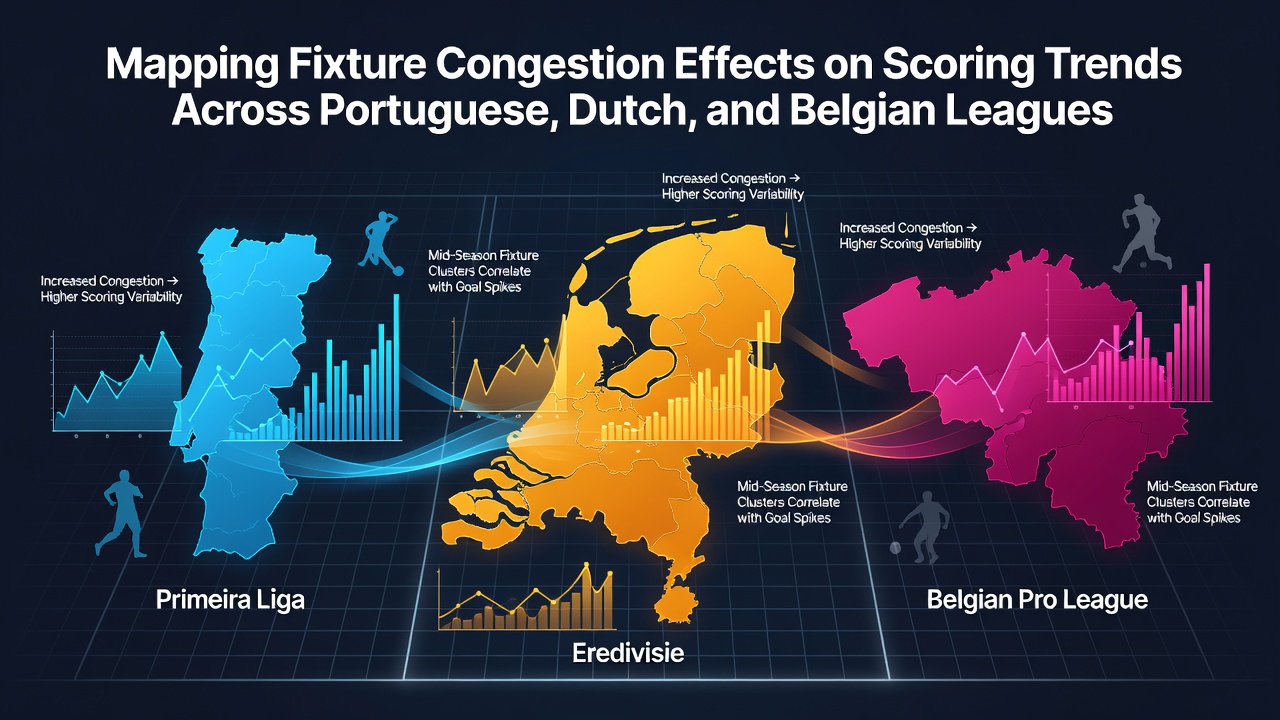
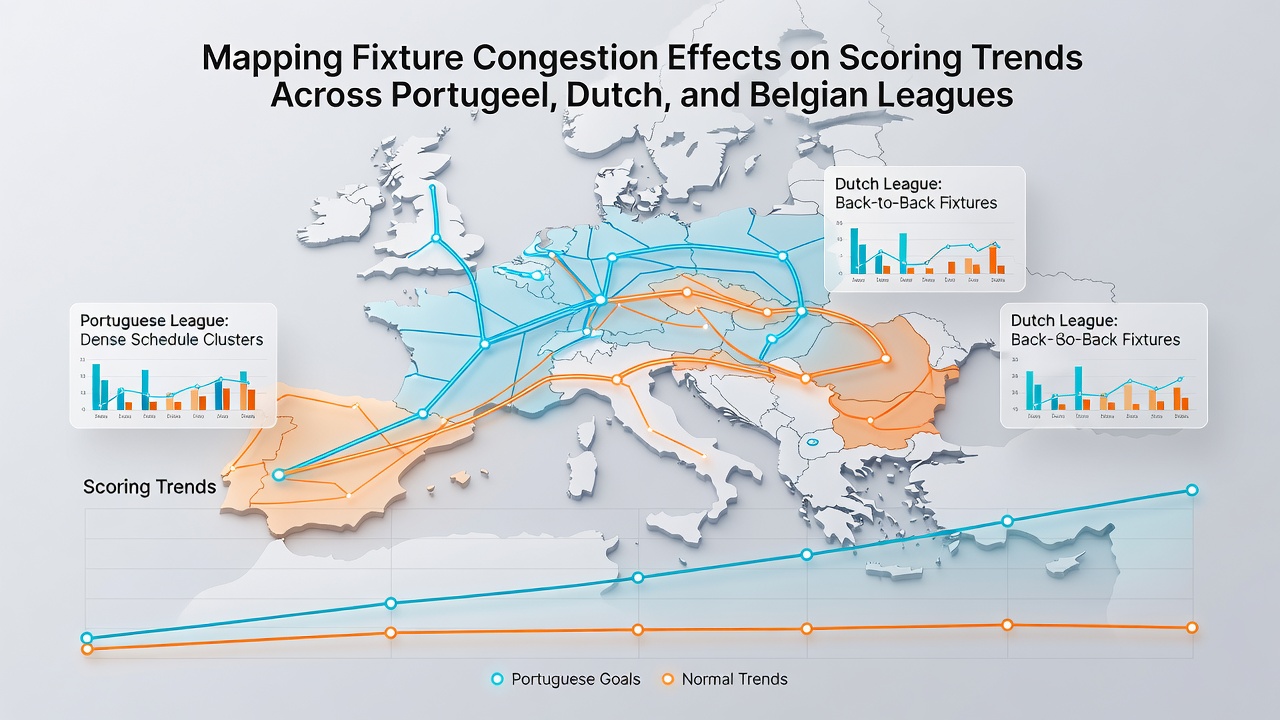
Fixture congestion arises when clubs play multiple matches within short timeframes, and observers track its influence on scoring across the Portuguese Primeira Liga, Dutch Eredivisie and Belgian Pro League. Data from league records show that teams balancing domestic duties with European competitions often encounter weeks with three or more fixtures, while researchers compile goal statistics from those intervals to identify measurable shifts in output.
Understanding Congestion Patterns in Smaller European Leagues
Clubs in these three leagues share structural similarities because they compete in UEFA tournaments yet maintain compact domestic calendars, and this combination produces distinct congestion windows during autumn and spring blocks. League tables compiled through 2025 reveal that Portuguese sides advancing in the Champions League or Europa League average 2.1 additional matches per month compared with non-European participants, while similar gaps appear in the Eredivisie and Pro League datasets.
August 2026 marks the opening of the 2026/27 campaign for all three leagues, and schedulers have already adjusted early-season dates to accommodate national team windows ahead of international qualifiers. Those adjustments create a compressed September period that analysts monitor for early indicators of fatigue effects on attacking metrics.
Primeira Liga: Goal Trends During Dense Schedules
Portuguese clubs record an average of 2.7 goals per game across the full season, yet figures drop to 2.3 during weeks containing at least one European fixture plus two domestic matches. Mid-table teams show the clearest reduction because they rotate fewer squad members than title contenders, and match reports from the 2024/25 season document lower shot volumes after 75 minutes in such congested blocks.
Travel distances within Portugal remain modest, but journeys to eastern European venues for continental ties add recovery time that data providers link to reduced high-intensity running statistics. League statisticians therefore separate home and away scoring splits when mapping congestion impacts.
Eredivisie Observations and Comparative Data
The Dutch top flight produces higher baseline scoring at 3.1 goals per match, yet the same pattern emerges during fixture pile-ups: output falls by roughly 0.5 goals when teams face three games inside eight days. Clubs with larger squads maintain closer to average totals, whereas sides relying on academy graduates exhibit sharper declines in second-half goal contributions according to Opta-derived metrics.
Winter scheduling in the Eredivisie includes a shorter break than many peers, and this factor compounds congestion when European ties extend into December. Researchers cross-reference player tracking data with goal timing to isolate whether late-match concessions increase under fatigue conditions.
Belgian Pro League Patterns and Cross-League Insights
Belgium's division records an average of 2.9 goals per fixture, and congested periods show a modest 0.4-goal reduction that aligns closely with Portuguese trends. The playoff phase adds further density because teams contest additional rounds while some players also feature in national team fixtures, and statisticians note elevated draw rates during these overlapping windows.
Comparative tables published by UEFA technical reports group the three leagues together when examining squad rotation policies, and the reports highlight that teams using five or more substitutes per game retain higher scoring rates across congested stretches. Belgian data further indicate that set-piece goals rise slightly as open-play creativity dips, a shift also observed in the other two competitions.
Methodological Approaches to Measuring Effects
Analysts compile rolling averages over four-match windows and compare them against season-long baselines, while controlling for opponent strength through expected goals models. Academic work from institutions in the Low Countries, including studies referenced by the International Centre for Sports Studies, applies regression techniques to isolate congestion variables from weather or referee factors. Such methods produce consistent findings across the three leagues: total goals decline measurably, yet the magnitude varies with squad depth and fixture spacing.
Conclusion
League datasets demonstrate that fixture congestion correlates with reduced scoring in the Primeira Liga, Eredivisie and Belgian Pro League, and the scale of the effect tracks with European participation levels. August 2026 scheduling decisions will determine whether early-season windows repeat or moderate these patterns, while ongoing collection of player workload metrics continues to refine the mapping of congestion against goal trends in each competition.