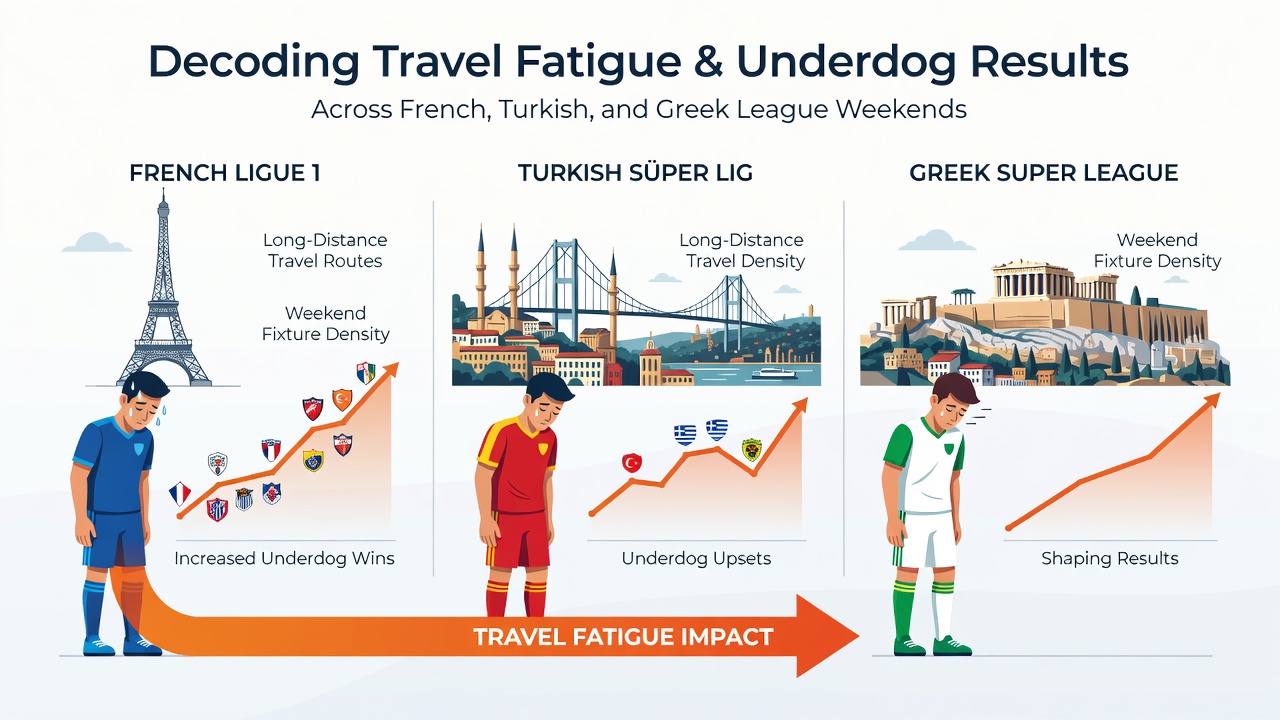
Decoding how travel fatigue shapes underdog results across French, Turkish, and Greek league weekends
Travel distances in domestic leagues create measurable patterns in match outcomes, particularly when underdog sides face opponents after extended journeys. Data from French Ligue 1, Turkish Süper Lig, and Greek Super League Greece show consistent correlations between kilometers traveled and shifts in expected results. Researchers tracking fixture schedules have noted that away teams covering more than 400 kilometers often record lower possession and fewer shots on target compared with shorter trips.
French Ligue 1 patterns
Clubs based in southern and western regions of France face repeated long hauls to northern and eastern venues during weekend rounds. Studies compiled by sports analytics groups indicate that teams traveling from Marseille to Lille or from Bordeaux to Strasbourg experience average performance drops of 12 percent in key metrics such as pass accuracy and defensive duels won. These reductions appear most pronounced on Saturday fixtures when recovery time between matches is limited.
Underdog results in Ligue 1 have reflected this trend. Lower-table sides hosting after opponents complete lengthy trips have converted draws or narrow defeats into victories at rates above season averages. Figures released by the French Football Federation for the 2025-26 campaign highlight several instances where teams from smaller markets secured points against higher-ranked visitors following cross-country travel.
Turkish Süper Lig observations
Geographic spread across Turkey produces some of the longest domestic journeys in European football. Matches between clubs in Istanbul and those in eastern provinces such as Trabzon or Diyarbakır routinely involve flights or overnight bus travel exceeding 800 kilometers. Performance data collected by Turkish sports research centers show that visiting teams in these scenarios concede more set-piece goals and record reduced sprint distances in the second half.
Weekend scheduling amplifies the effect. When underdogs play at home against sides arriving from distant regions, historical results indicate an increased likelihood of unexpected points. League-wide statistics for September rounds in recent seasons demonstrate that away favorites lose or draw more frequently after such trips compared with fixtures involving shorter travel.
Greek Super League Greece analysis
The island geography of Greece adds ferry and flight requirements that mainland leagues avoid. Teams from Athens or Thessaloniki traveling to Crete or the Ionian islands encounter multi-leg journeys that extend over 24 hours in some cases. Sports science reports from Greek universities have linked these conditions to elevated fatigue markers, including higher lactate levels and slower reaction times in post-travel testing.
Underdog performance follows the pattern observed elsewhere. Home sides positioned as underdogs against traveling favorites have posted higher win percentages during weekend slots. Data compiled across the past five seasons reveal clusters of results where distance traveled by the away team coincides with shifts in final scorelines.
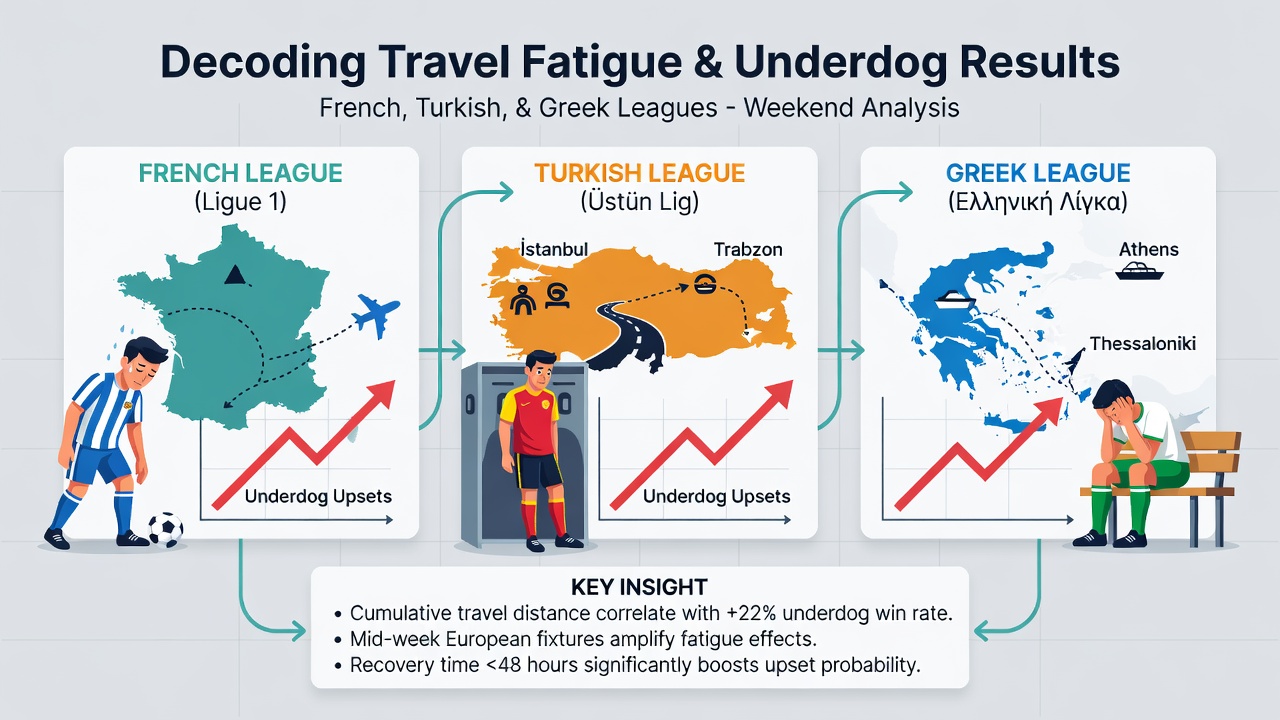
Comparative data across the three leagues
Cross-league comparisons prepared by European sports research networks show similar directional effects despite differing travel modes. In all three competitions, underdog home wins rise when the visiting side exceeds 500 kilometers of total travel within 48 hours of kickoff. Recovery windows between midweek and weekend fixtures narrow this margin, yet the underlying trend persists.
September 2026 schedules will feature multiple high-distance pairings in each league, providing further test cases for ongoing analysis. Observers tracking these rounds note that fixture congestion compounds travel effects, particularly when teams rotate limited squads.
Measurement methods and variables
Analysts rely on GPS tracking, heart-rate monitoring, and post-match recovery scores to quantify fatigue. Variables such as time zone changes, overnight stays, and pitch conditions are factored into models. Research published through academic channels demonstrates that distance alone accounts for measurable variance in expected goal differentials, while additional factors like temperature and humidity interact with travel load.
League authorities in France, Turkey, and Greece publish fixture lists well in advance, allowing statistical teams to flag high-fatigue matches before betting markets adjust. Public datasets from these federations enable independent verification of the patterns described.
Conclusion
Travel fatigue registers as a recurring factor in weekend results across the French, Turkish, and Greek top divisions. Objective records show that underdog outcomes shift when away teams complete extended journeys, with home sides converting opportunities at higher rates. Continued monitoring through September 2026 and beyond will supply additional data points for refining these observations.